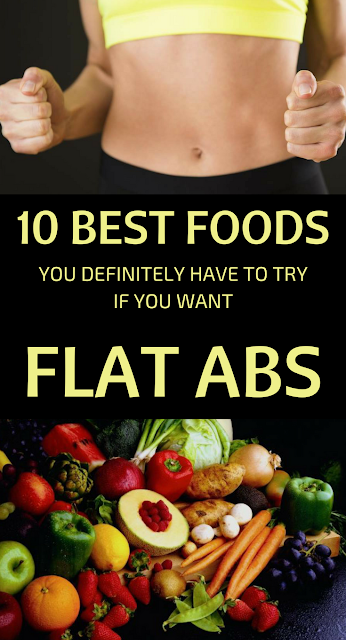
Eat more to get flatter abs because each bite of these foods will provide you with a dose of amazing nutrients.
It’s a sad fact, but you can crunch yourself to death and still have abdominal flab. You must make dietary changes if you truly want a trim, seductive midriff. The most effective foods for reducing waist size all have protein to support a healthy metabolism, fiber to reduce bloating, and antioxidants to increase the efficiency of your ab exercises.
Here are the top 10 options for flattening your abs:
1. Almonds
These delicious and versatile nuts contain filling protein and fiber,
not to mention vitamin E, a powerful antioxidant. They’re also a good
source of magnesium, a mineral your body must have in order to produce
energy, build and maintain muscle tissue, and regulate blood sugar. “A
stable blood-sugar level helps prevent cravings that can lead to
overeating and weight gain,” says David Katz, MD, a professor at the
Yale University School of Medicine. But what makes almonds most
interesting is their ability to block calories. Research indicates that
the composition of their cell walls may help reduce the absorption of
all of their fat, making them an extra-lean nut.
Try for: An ounce a day (about 23 almonds), with approximately 160 calories. An empty Altoids tin will hold your daily dose perfectly.
2. Eggs
You won’t find a more perfect protein source. Eggs are highly
respected by dietitians because of their balance of essential amino
acids (protein building blocks used by your body to manufacture
everything from muscle fibers to brain chemicals). We like them because
they keep our hands out of the cookie jar. Researchers at the Pennington
Biomedical Research Center found that when people ate eggs in the
morning, they felt less hungry throughout the day than when breakfast
consisted of complex carbohydrates like bagels. “The protein and fat in
the egg may be contributing to the feeling of satiety,” says lead
researcher Nikhil V. Dhurandhar, PhD.
Try for: One egg a day, unless you have high
blood cholesterol, in which case you should check with your doctor
first. (One egg packs about 213 milligrams of cholesterol.)
3. Soy
Soybeans are a great source of antioxidants, fiber, and protein.
Plus, they’re incredibly versatile. Snack on dry-roasted soybeans, toss
shelled edamame into soups, and slip a spoonful of silken tofu into your
morning smoothie. Liquid soy also makes a good meal replacement: A
study from the Journal of the American College of Nutrition found
that overweight subjects who drank a soy milk–based meal replacement
lost more weight than those who consumed a traditional dairy-based diet
drink.
Try for: Twenty-five grams of whole (not
isolated) soy protein daily. A half cup of steamed edamame contains
about 130 calories and 11 grams of protein. Four ounces of tofu (94
calories) contain 10 grams. Choose whole soy foods over products packed
with “isolated soy protein” — the latter may not provide all the
benefits of whole soybeans.
4. Apples
A 2003 study in the journal Nutrition found that overweight
women who consumed three apples or pears a day for three months lost
more weight than their counterparts who were fed a similar diet with oat
cookies instead of fruits. “A large apple has five grams of fiber, but
it’s also nearly 85 percent water, which helps you feel full,” explains
Elisa Zied, RD, author of So What Can I Eat?! (Wiley, 2006).
Apples also contain quercetin, a compound shown to help fight certain
cancers, reduce cholesterol damage, and promote healthy lungs.
Try for: An apple (or two) a day. A study published in the Journal of Agricultural and Food Chemistry found that the Red Delicious, Cortland, and Northern Spy varieties had the highest antioxidant activity.
5. Berries
Most are loaded with fiber, every dieter’s best friend. The more
fiber you eat — experts say that it’s best to get between 25 and 35
grams every day — the fewer calories you absorb from all the other stuff
you put in your mouth. That’s because fiber traps food particles and
shuttles them out of your system before they’re fully digested. Berries
(and other fruits) are also high in antioxidants, which not only help
protect you from chronic diseases like cancer but may also help you get
more results from your workouts. “Antioxidants help improve blood flow,
which can help muscles contract more efficiently,” says Dr. Katz.
Try for: At least half a cup daily, or about 30
calories’ worth. Don’t limit yourself to the usual suspects, like
raspberries, blueberries, and strawberries. If you can find them, add
boysenberries, gooseberries, and black currants to the mix for
excitement
6. Leafy Greens
Their cancer-preventing carotenoids won’t help shrink your waistline,
but their low calorie count definitely will. One cup of spinach
contains only about 40 calories, while a cup of broccoli has 55 calories
and satisfies 20 percent of your day’s fiber requirement. Most leafy
greens are also a good source of calcium, an essential ingredient for
muscle contraction. In other words, they help fuel your workouts.
Try for: Three servings daily. Keep a bag of
prewashed baby spinach in your fridge and toss a handful into soups,
salads, pasta dishes, stir-fries, and sandwiches. When you get sick of
spinach, reach for a bunch of arugula, broccoli rabe, or broccolini, a
cross between broccoli and Chinese kale.
7. Yogurt
People who get their calcium from yogurt rather than from other
sources may lose more weight around their midsection, according to a
recent study published in the International Journal of Obesity.
The probiotic bacteria in most yogurts help keep your digestive system
healthy, which translates into a lower incidence of gas, bloating, and
constipation, which can keep your tummy looking flat.
Try for: One to three cups a day of low-fat or
fat-free yogurt. Choose unsweetened yogurt that contains live active
cultures. Add a handful of fresh chopped fruit for flavor and extra
fiber.
8. Veggie Soup
Researchers at Pennsylvania State University found that people who
ate broth-based (or low-fat cream-based) soups two times a day were more
successful in losing weight than those who ate the same amount of
calories in snack food. Soup eaters also maintained, on average, a total
weight loss of 16 pounds after one year. “Plus, it’s a simple way to
get your vegetables,” says Susan Kleiner, PhD, RD, author of Power Eating (Human Kinetics, 2001).
Try for: At least one cup of low-calorie, low-sodium vegetable soup every day.
9. Salmon
Seafood, especially fatty fish like salmon, tuna, and mackerel, is an
excellent source of omega-3 fatty acids. These uber-healthy fats may
help promote fat burning by making your metabolism more efficient,
according to Kleiner. An Australian study showed that overweight people
who ate fish daily improved their glucose-insulin response. Translated,
this means that seafood may help slow digestion and prevent cravings. If
that doesn’t hook you, consider this: Seafood is an excellent source of
abs-friendly protein.
Try for: Two four-ounce servings per week. Wild
salmon, though pricey, contains more omega-3 fatty acids than
farm-raised. (If it doesn’t say wild, it’s farm-raised.) If seafood’s
not your thing, you can get your omega-3’s from flaxseed (grind and
sprinkle on your cereal) or walnuts.
10. Quinoa
Never heard of it? Pronounced KEEN-wah, this whole grain contains 5
grams of fiber and 11 grams of protein per half cup. Cook it as you
would any other grain (although some brands require rinsing). Quinoa’s
nutty flavor and crunchy-yet-chewy texture are like a cross between
whole-wheat couscous and short-grain brown rice.
Try for: At least one half-cup serving (a third
of your whole-grain requirements) per day. Try substituting AltiPlano
Gold brand instant quinoa hot cereal (160 to 210 calories per packet),
in Chai Almond and Spiced Apple Raisin, for oatmeal. Look for it in
health-food stores.