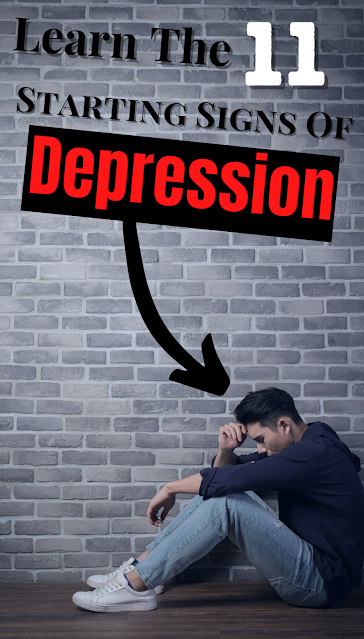
Because the initial signs of depression are frequently subtle and go unnoticed, it may be difficult to diagnose depression because people may not pay close attention to these signs.
These Are The 11 Starting Signs of Depression:
1. Constant Melancholy
Sadness, moodiness (throughout the whole day, virtually every day), or “bad mood” and grouch;
2. Existential Fear
Anxiety,
nervousness, sudden attacks of anxiety and sadness, anxiety, fear of
the long run or indefinite feeling of fear, alienation and absence,
unwilling to being company;
3. Cognitive Problems
Poor concentration and memory, absentmindedness, confusion, indecision;
4. Insomnia
Difficulty
falling asleep, waking up throughout the night, waking up early each
day, at least 2 hours before the usual time, after which the person
cannot fall asleep.
5. Bad thoughts and exaggerated sense of guilt.
They
truly are preoccupied with past or current issues (obsessive thoughts),
question their behavior to other people in the past and excessively
blame themselves for neglecting the others, as well as for all most of
the bad things that have happened to them in life.
They often have a feeling of hatred and have a disgust with themself;
6. Feeling of loss
Loss
of reputation and money, betrayed love or death of a loved one, and the
like, leading to a feeling of inferiority, loss of self-esteem and
self-confidence, accompanied with an anxiety about abandonment and loss
in a person.
Note: There exists a normal sense of loss, followed
by sadness, when losing a close person, money, reputation, health and
the like.
Unlike the feeling of loss in depression, normal
grieving just isn’t accompanied with suicidal a few ideas or feelings of
deep hopelessness and worthlessness, sadness and it gradually
disappears after a shorter or longer period.
For instance , after
the death of a close person, frequently it takes of a year for anyone to
get back in to their psycho-physical balance and become in a position
to resume a relatively normal life. So, if the grief and mourning
extends and complicates in different ways, in this case, it may indicate
a depression.
7. Indifference
Loss of interest,
difficulty in enjoying all, or the majority of activities, inability to
laugh and achieve satisfaction in different aspects of life, reduction
of sexual drive.
8. Motivational problems
Feeling
of hopelessness and helplessness, intermittent condition of stupor,
looking in one single spot, lack of energy, speaking in the lowest voice
(sometimes nearly in a whisper), frequent and violent mood swings,
feeling of painful loneliness, even in the company of a loved one
9. Fatigue
Constant feeling of fatigue and rapid muscle fatigue, weakness and a feeling of disability for work or activity
10. Lethargy
Nearly
any obligation seems hard, pessimism in everything that relates to
future, dejection, concern over unimportant things, hypersensitivity,
crying, sighing
11. Thinking how worthless life is, about death and suicide.
These
thoughts occur in about 60% of depressed individuals (often think of
the reunion with their nearest and dearest after death, or just around
their family’s reactions to their deaths and the like).
These
symptoms can be found in different combinations. The observable symptoms
could possibly indicate depression only whenthey last for more than a
couple of weeks.
Some people notice these changes in themselves,
but usually they deny them initially and recognize them after some time.
Many neglect their symptoms, or associate them with certain traumatic
events in their life. Sometimes depression may hide behind any physical
interference.
In fact, many people deny their psychological
symptoms, and complain only to physical symptoms, which most commonly
affect their central nervous system, or their cardiovascular,
gastrointestinal and musculoskeletal system.
These symptoms
include complaining of lethargy, frequent headaches, increased heart
rate, palpitations and heartbeat skipping, dry mouth, vomiting,
diarrhea, stomach pain and cramps, constipation, back pain, feeling of
pressure or heaviness in chest, shaking and numbness in some parts of
the body, usually in arms and legs.
Adolescents
Besides
the previously mentioned symptoms, there are numerous other symptoms
that may indicate depression, including irritability, mood swings,
restlessness, dilemmas in school, truancy, antisocial behavior,
promiscuity, poor hygiene, increased sensitivity to rejection and abuse
of psychoactive substances.