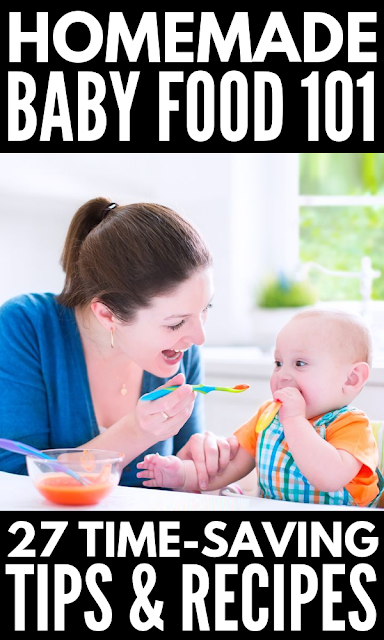
It’s likely that you’ve heard a lot of advantages to feeding your infant fresh food. The good news is that making baby food at home is much easier than you may have thought. This may be what’s keeping you wondering. In the interim, you’ll not only be saving a ton of money but also providing your baby with healthy homemade food. Indeed, with the tips I’ve compiled for you, even the busiest mother has time to learn how to prepare homemade baby food.
How to Make Homemade Baby Food
This post will take you through 3 simple subsections—what you need to
know before introducing solids, easy hacks and practical tips about how
to actually make homemade baby food, and recipes and food combinations
to try. Feel free to start at the beginning, or hop to a particular
section if that’s the info you need most.
Introducing Solids 101: 3 Things to Know
Your baby has been safely chugging along on a diet of breastmilk or
formula, and is about to hit the time to add solids. First of all, don’t
panic! It can seem overwhelming (and frankly a little scary) to think
about starting your little one on solid foods—we’ve all been there!
How to Know if Your Baby is Ready for Solids
Thankfully, there are some easy ways to tell when your baby is actually ready for solids:
- They are around six months of age. According to
the American Academy of Pediatrics (AAP), around six months is the
proper time to begin introducing solids. The AAP also advises that
babies who begin solids too early are more likely to be obese in
adulthood. - They can hold their head up. Another major marker
for a solid-ready baby is the ability to hold their own head up with
properly developed neck muscles (this is when all that dreaded tummy
time starts paying off!). - They can sit up on their own. This ensures your baby has proper alignment for chewing, swallowing and digesting food safely.
- They appear interested in table food. Have you
noticed your baby leaning towards your plate or opening their mouth when
you pick up a fork? These are a few signs that baby is interested!
What Should Baby’s First Food Be?
Now that you know your baby is showing the readiness signs of solids,
where do you actually start? Is now the time to know how to make
homemade baby food? What is a good first food?
There’s no definitive answer to this, as there are many schools of
thought, but a great food to start with is baby cereal. The Center for
Disease Control recommends parents feed their children fortified cereals
like oats, barely and multi-grain rather than just rice cereal, as
there is a risk for exposure to arsenic.
You could also try a homemade puree as a first food—like a cooked
sweet potato mixed with breastmilk or a mashed banana. Whichever food
you choose, give your baby a tablespoon or two and let them explore the
taste and texture. Keep in mind that baby’s tummies are very small, and
it doesn’t take much to make them full!
If you have a family history of food allergies, it’s best to talk to
your pediatrician about how to navigate that, and if/when to introduce
that particular food type.
How Often Should Babies Eat Solid Foods?
At the beginning, food is just supplemental and for fun. As
breastmilk or formula is still the main source of nutrition for babies
aged 6 months up to a year, this is a great opportunity to allow your
child to be exposed to different flavors and textures. Remember, start
small—an infant’s stomach is tiny! Aim for one to two ounces of food
three to four times a day around six months, then bump it up to six to
eight ounces of food three times a day with two snacks in between.
How to Make Homemade Baby Food: 3 Hacks for Moms
Now it’s time to dive into the practicals—exactly how to make
homemade baby food! These tips and tricks will keep your sanity and save
you money, while keeping baby fed nutritious food.
Find the Right Equipment
One of the best ways to ensure learning how to make homemade baby
food is a success is to equip yourself with tools to make the entire
process super easy. There are several items you could consider adding to
your baby registry or ordering yourself off Amazon. Here are some great
options:
All-in-one
These type of baby food makers are becoming increasingly popular for
one simple reason—they are super easy! These guys steam your food and
then puree it all in one convenient machine with a few button pushes—and
they are not as expensive as you’d imagine. Here are some to consider:
Blender or Food Processor
If you prefer to steam your own food, or perhaps would rather work in
larger quantities, a blender or food processor is the way to go. Here
are some of the most popular ones to make baby food with:
Food storage
Now that you have the equipment to learn how make homemade baby food,
you’ll need some way to store it. Here are some simple options that
moms love
How to Make Homemade Baby Food in Bulk
Many moms prefer to make baby food in bulk because it saves them from
that dreaded moment where there’s no fresh baby food in the house and
your child is screaming. Cooking baby food in bulk saves a lot of stress
and time—you can cook once a week or once a month and have enough for
your little one to eat.
If you decide to go with an all-in-one system, your opportunities to
make bulk baby food are somewhat limited—you are stuck with the amount
of food recommended by each brand’s manufacturer guidelines. But, even
with an all-in-one system, you can still make enough food for a week or
more.
To make homemade baby food in bulk using the all-in-one type system,
make sure you have plenty of extra containers on hand. You’ll make food
the same as usual, but instead of ending it with one cycle and storing
in the containers that come with it, you’ll instead scoop the food into
different (or additional) containers and then do another cycle. Keep
going until you have the amount of food you’d like!
If you are working with a blender, things are a bit simpler in the
bulk sense as you can work with larger quantities. Simply roast, boil or
steam your veggies and fruits of choice, puree and store.
Quick Tips for Freezing Homemade Baby Food
Part of the trick to making baby food in bulk is to freeze it
appropriately. Before you begin cooking, make sure there is sufficient
room in your freezer (yes, go ahead and eat that ice cream to make some
room!). You’ll also want to make sure your baby food containers are
airtight and freezer safe so the food is stored safely. Lastly, invest
in some labels so you can clearly mark what the food is and the date it
was frozen. Trust me, pureed broccoli and spinach look awfully similar! I
like these reusable baby food labels because they can be used over and
over.
21 Baby Food Recipes and Combinations to Try
Ready to get to the recipes that show you exactly how to make
homemade baby food? Here are 21 simple recipes and ideas that you can
use over and over to nourish your little ones.
- Steamed sweet potatoes: steam sweet potatoes until
they are soft, then add to blender with 1-2 tbsp of breast milk or
formula, or more if needed. Puree until smooth. - Pumpkin, yogurt and banana: this recipe is rumored to taste like a (healthy) pumpkin pie!
- Beet and blueberry mash: this purple puree is beautiful, and a great way to get antioxidants into your babe
- Pureed peas: grab some frozen peas and heat them up
until soft. Toss them in a blender with breastmilk or formula and water
and puree until you hit a smooth texture. As your baby gets older, you
can make them a little more chunky so they can experience new textures. - Kale and sweet potato mash: get your little one on the kale bandwagon the easy way with this tasty mash.
- Mango and kale puree with ginger: this puree looks like something I would eat too!
- Homemade applesauce: bake apples slices with a tsp of cinnamon sprinkled on top, then puree them with a few tablespoons of water.
- Turkey, corn, zuchinni and chive puree: if you have some leftover turkey, you must make this recipe!
- Pumpkin and white bean bisque: if you’re searching for how to make homemade baby food that you can eat as well—this recipe is one the whole family will enjoy!
- Chicken and apple puree: chicken is super easy to
puree and a great source of protein, so you might find yourself reaching
for recipes like this one often. - Avocado puree: mash an avocado with breastmilk or water, and let your baby enjoy.
- Avocado, strawberry and mango smoothie: a smoothie like this one is a great food for baby because it’s easy to digest and the cold helps soothe teething gums.
- Peach and cauliflower puree: this is a great first foods option that baby will be sure to love thanks to the slightly sweet peach-y flavor.
- Homemade baby oatmeal: did you know you can make your own baby oatmeal right at home?
- Carrot puree: chop and steam carrots, then puree
along with the liquid of your choice. Carrots are naturally sweet, so
this is a great first food option! - Broccoli and potato puree: this recipe is a great way to make the move from sweet to savory.
- Chicken, carrot and ginger puree: if you are making
chicken for dinner, set aside some to make this tasty baby food so your
little one can eat right along with you. - Banana oatmeal: dress up a basic baby oatmeal with mashed banana and dash of cinnamon.
- Butternut squash and pear puree: this recipe is a great one to make in bulk, or make alongside some squash for your own dinner.
- Blueberry, chickpea and rosemary chunky puree: this puree is superfood-packed and looks delicious!
- Baby food lasagna: last but not least, a baby food puree that you might be jealous of!
So, now that you know how to make homemade baby food, which recipe will you try first? Just remember, you’ve got this, mama!