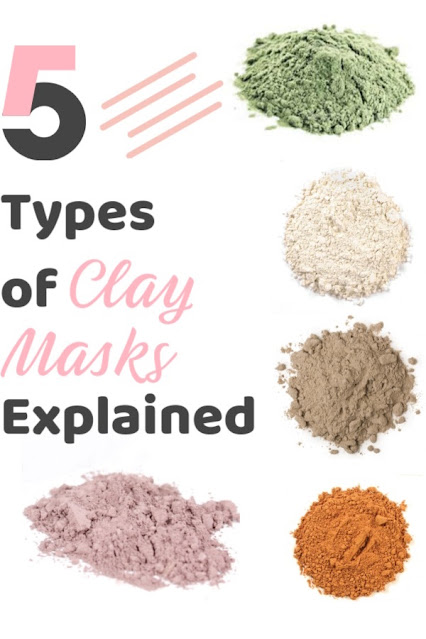
For centuries, clay masks have occupied a prominent position in the world of natural skincare. These earth-derived treatments have a long history of use, from the high-status courts of ancient Egypt to contemporary spas. However, not all clays are made equally. Each kind of clay has special qualities that address particular skin issues. In this article, we’ll examine the various types of clay on the market and learn about the wonderful advantages they provide for your skin.
What Are Clay Masks?
Clay masks are fundamental skincare items made primarily of particular types of clay. The clay can be used to make a paste that can be applied to the skin when combined with liquids like water or floral waters. A popular choice for deep cleansing, the mask absorbs impurities, oils, and toxins from the skin as it dries.
Different Types of Clays and Their Benefits
1. Kaolin Clay
- Color Variations: White, Pink, Yellow, Red
- Properties: This is one of the mildest clays,
making it suitable for sensitive skin. It gently exfoliates and cleanses
the skin without causing inflammation. - Benefits:
- White Kaolin: Ideal for sensitive and dry skin. It softly cleanses and exfoliates without extracting too much oil.
- Pink Kaolin: A mix of red and white Kaolin, it’s perfect for those with sensitive skin that needs a touch of rejuvenation.
- Yellow Kaolin: Has slight exfoliating powers and is great for gently brightening the complexion.
- Red Kaolin: Ideal for oily skin. It absorbs oils and is great for deep cleansing.
2. Bentonite Clay
- Color: Grey or Cream when dry, but turns to a soft green when wet.
- Properties: Derived from volcanic ash, this clay is
known for its powerful absorbing abilities. It carries a strong
negative charge that helps pull positively charged toxins and impurities
from the skin. - Benefits: Great for oily skin and acne-prone types. It helps in unclogging pores, removing excess sebum, and detoxifying the skin.
3. Rhassoul Clay (Ghassoul Clay)
- Color: Brownish-red
- Properties: Mined from the Atlas Mountains in
Morocco, Rhassoul clay is rich in minerals. It has an elastic texture
and is known for its unmatched ability to absorb. - Benefits: It’s excellent for both skin and hair. It
reduces dryness, flakiness, and improves skin elasticity. Furthermore,
it helps in removing blackheads and tightening pores.
4. French Green Clay
- Color: Green, as the name suggests
- Properties: Contains a variety of minerals and its green color is attributed to decomposed plant matter and iron oxide.
- Benefits: Perfect for oily skin. It’s excellent at
drawing oils, toxins, and impurities from the skin. It stimulates
circulation, tightens pores, and revitalizes the complexion.
5. Fuller’s Earth Clay (Multani Mitti)
- Color: Tan or light brown
- Properties: This clay is known for its
oil-absorbing properties. It’s abundant in minerals, especially
magnesium chloride which helps reduce acne. - Benefits: It’s a favorite for those with oily skin. Helps in treating acne, reducing scars, and brightening the skin.
How to Use Clay Masks
- Cleanse Your Face: Always start with a clean face. Remove any makeup, dirt, or impurities.
- Mix the Clay: Combine your chosen clay with a liquid of your choice (water, rose water, milk, etc.) to form a smooth paste.
- Apply the Mask: Using your fingers or a brush, apply a thin layer of the mixture to your face. Avoid the eyes and mouth.
- Wait: Let the mask sit for 10-15 minutes or until
it dries. If you have sensitive skin, you might want to keep it on for a
shorter time. - Rinse: Gently rinse the mask off with warm water and follow with a moisturizer.
Incorporating clay masks into your skincare routine can offer
numerous benefits tailored to your specific skin type and concerns. With
their natural and mineral-rich properties, these masks not only cleanse
and detoxify but also provide therapeutic and healing benefits that
have stood the test of time. So, find the one that suits your skin type,
and let the power of earth elevate your skincare routine!
The Science and History of Clay Masks
Ancient Roots
The use of clay as a healing and beautifying agent goes back
millennia. Civilizations from the Ancient Egyptians to the Indus Valley
all prized clay for its therapeutic properties. Cleopatra, the renowned
Egyptian queen, was said to use Dead Sea mud to keep her skin radiant.
In the Americas, indigenous tribes were known to use local clays for not
only skin beautification but also for its healing properties in
treating wounds.
The Science of Absorption
At the microscopic level, clays have a lattice-like structure which
allows them to absorb impurities. Most clays have a negative electrical
charge, whereas impurities, like many toxins, have a positive charge.
This means that when you apply a clay mask, it acts like a magnet,
drawing out the positively charged impurities from your skin. This is
why your skin can feel refreshed and “cleaner” after using a clay mask.
Deep Dive into Other Clays
Dead Sea Mud
- Color: Dark gray
- Properties: Harvested from the Dead Sea, this mud is rich in minerals like magnesium, calcium, and potassium.
- Benefits: It’s known to improve skin elasticity, minimize pores, reduce wrinkles, and soothe skin ailments like psoriasis and eczema.
Umbrian Clay
- Color: Creamy pale gray
- Properties: Found only in the small Italian town of Nocera Umbra, this clay is rich in minerals.
- Benefits: It has a high mineral content that aids in neutralizing acidity on the skin, helping balance its pH and reduce inflammation.
FAQ on Clay Masks
1. How often should I use a clay mask? For most skin
types, once a week is sufficient. However, if you have particularly
oily skin or if you’re tackling a specific issue like a breakout, you
might opt to use it twice a week.
2. Can I use clay masks with other facial treatments?
Yes, but be cautious. Using a clay mask after exfoliating, for
instance, might cause irritation because your skin can be more sensitive
post-exfoliation.
3. My skin feels dry after using a clay mask. What should I do?
Always moisturize after using a clay mask. Some clays, especially those
that absorb oils, can make your skin feel dry. Use a hydrating
moisturizer or facial oil after removing the mask.
4. Can I use any type of water to mix my clay mask?
Yes, but many people prefer using distilled or mineral water to avoid
any contaminants found in tap water. Additionally, using herbal teas or
floral waters like rose or lavender water can add therapeutic benefits.
Conclusion
The art and science of using clay masks have evolved over centuries,
but the core principles remain. Different clays suit different skin
types, but their fundamental role is to cleanse, purify, and rejuvenate.
By understanding the unique characteristics and benefits of each type,
you can tailor your skincare routine to harness the earth’s natural
power for radiant, healthy skin. Remember, beauty is not just skin deep –
it’s as old as the earth itself!