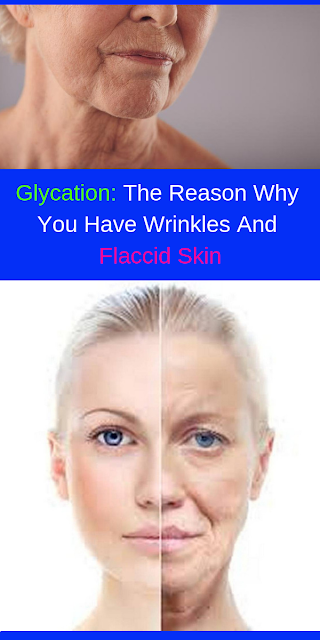
The surprising reason why you have wrinkles and flabby skin, that has a
name: Glica: Every time we look in the mirror we realize that new
wrinkles have come out and that the skin hangs and it is getting more
and more flabby.
Glycation is the name of the main cause of aging of the skin.
What does glycation mean?
Glycation is a chemical reaction that makes us old, but what does this
strange word mean? It is similar to the word glucose and is not by
chance … Glycation is the result of the body’s reaction to sugars,
something that is given more and more because of poor eating. We give
you some explanations to understand and combat this phenomenon that
contributes to skin aging.
We have been able to elucidate the mystery of glycation thanks to the
study of Valérie Espinasse, doctor in pharmacy, micronutrition,
nutriterapeuta and phytotherapist. What is it? Where does it come from?
That makes? Can you fight? Questions to be answered in the comments of
this anti-aging specialist.
Glycation: a food phenomenon
Glycation is a chemical reaction that mainly operates in the dermis: the
glucose molecules (sugar) present in our food react with molecular
protein structures, thus generating disorganization of the dermis. On
the other hand, glycation engenders larger proteins, called
“glycosylated proteins”, harmful to the body, since the body can not
destroy or release them.
How are the effects of glycation translated?
With age, the glycosylated proteins accumulate in the cells and end up
destroying the mattress supporting the skin (forming collagen and
elastin). In other words, the glucose overlaps around the collagen and
elastin fibers that over time become stiffer, they could even break.
This slow process affects all the proteins of the organism throughout
the life and unfortunately, it is irreversible. Hence the importance of
combating the phenomenon of glycation earlier, since, little by little,
it damages the subcutaneous substance that supports the dermis. Result:
loss of elasticity and tonicity. We can see how surface wrinkles are
installed and hollowed out and how skin hydration weakens.
Glycation: a healthy diet for a healthy body
We can be 40 years old, be splendid and count the wrinkles with the
fingers of one hand if we have a good hygiene of life … And have lots of
wrinkles and flabby skin with 45 years if we do not care our body.
Fighting against glycation is very easy if we pay attention and care for
food. To avoid this phenomenon and its undesirable effects, bet more on
steamed or slow cooking and low heat. Forget the grills, the cooking
from 180 degrees and prepared sauces filled with fat.
Eat raw foods, such as fruits and vegetables that are packed with
antioxidants. These latter help the body not to produce glycosylated
proteins. Obviously, it decreases or even eliminates the consumption of
sweets, cakes and fast sugars in general. In short, a basic diet
follows, there are no better foods than others, but the way to consume
them, which gives them some properties or others.
If we want to caricature the anti-aging diet of the skin, the more raw
foods we eat, or the less cooked we can, the better! And above all, you
have to drink water! Many times we forget it, but when water is mineral,
it stimulates the collagen fibers and the elasticity of the skin …
Without forgetting that it hydrates its interior and, therefore, the
exterior of our body!
Carnosine, which we have known for more than a century, is naturally
present in our body (in the human brain and muscles). Composed of two
amino acids from the digestion of meats, it is known for its preventive
properties of aging. Its most important effect is antigliction. It acts
on the sugar molecules that, instead of being fixed on the collagen
fibers, are fixed on the carnosine and this reduces the glycation of the
proteins.
In the fight against stiffness of the tissues, carnosine helps to
preserve the flexibility of the mattress supporting the skin that will
retain a good elasticity and better resist the daily alterations and the
appearance of new wrinkles. Your epidermis will rejuvenate!
Foods that have carnosine
If you eat cereals, legumes, nuts, fruits and vegetables, you acquire
the essential amino acids so that your body then manufactures creatine
and carnosine. It is true that these two amino acids are found directly
in products of animal origin, so the body does not need to make them,
but it does not matter too much where the amino acid comes from, whether
it comes from a piece of meat or Own organism, both are good alike,
although in the first case, an animal is killed to be able to get it.